

Wine Reviews (Full Page)
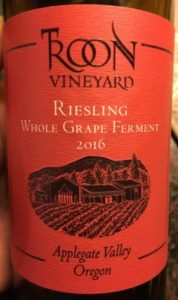
May 15, 2018Wine ReviewsApplegate Valley, Oregon
88 Points | “Recommended”
And now for something completely different…but first, a little reminder: white wines are customarily made by pressing juice from the skins following crush, and then fermenting that juice into wine without skin contact. Skins, therefore, play little or no role in a white wine’s color, aromatics, or flavors, and tannins in the skins do not leach into the wine. Red wines, by contrast, are fermented directly on the skins for an extended period to extract color, tannin, flavor, and texture. Only after or near the end of primary fermentation is red wine separated from the skins.
So here is the something completely different: a “whole grape ferment” wine made from a white grape variety — in the present case, Riesling — that was fermented on the skins in the method of making a red wine. The result is what is called an “orange wine” (some prefer to call this style “skin-fermented”), as the juice has acquired darker pigmentation along with tannin, texture, and flavor from the skins during fermentation.
While this approach may be unusual in modern winemaking, the method actually harkens back to ancient winemaking practices in the nation of Georgia in the Caucasus region of Eurasia (generally considered to be the cradle of winemaking). Over time, the method made its way to eastern and southern Europe, and today orange wines are most commonly found in Slovenia and Italy where they are made from an array of white grape varieties.
Troon’s rendition has a warm glow to it — more the color of a super-ripe peach than orange — and delivers an intriguing, though elusive, aroma and flavor profile wholly unlike Riesling made in the customary fashion. On the nose are impressions of melon, banana peel, and tarragon; and on the palate, notions of orange peel, raw almond, and rosemary — all framed by undertones of pear, spearmint, and saline minerality over a lean, savory finish.
The wine is bone dry, medium-bodied, and fresh on the palate, with moderate acidity and no discernable oak. After 10-day fermentation, it was pressed into mature/neutral French oak barrels where it sat for only three months before being bottled.
In terms of style and character, there is really nothing to compare this wine to (except, perhaps, another orange wine), but it should appeal to fans of the lean, dry white wines from wine regions along the eastern Mediterranean.
The folks at Troon Vineyard continue to impress us with their embrace of natural, creative, and age-old (though today unconventional) winemaking techniques. They employ only native yeasts in ferments, use no additives — such as acids, sugar, and enzymes — in their wines, and use only mature oak barrels for aging (no new oak). Here is hoping they continue to think outside of the wine box.
12% ABV | Bottled 03/09/2017 | $20
Food Pairing
Well-suited for springtime and summer sipping with mild or funky cheeses, oily fish (salmon, trout, tuna), and Mediterranean fare — especially assorted tapas.
Availability
For information on how you may obtain Troon’s 2016 Whole Grape Ferment Riesling, visit the winery virtually at www.troonvineyard.com. [...]
Read more...
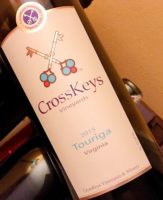
May 15, 2018Travel & Activities / Wine ReviewsShenandoah Valley, Virginia
87 Points | “Recommended”
Crafted from the Portuguese variety Touriga Nacional (a common blending grape in Port wine), this plump, medium-bodied red offers savory aromas and flavors of black fruit, tobacco, nutmeg, and earthy minerality over a velvety palate. Oak (9 months) and tannins are well integrated, with mild acidity. A solid showing for this variety in Virginia. Fresh, appealing, and food versatile. Drink now through 2022.
12.5% ABV | 200 Cases Produced | $35
Availability: www.crosskeysvineyards.com [...]
Read more...
May 15, 2018Wine ReviewsA revelation as to the promises of grape growing and winemaking in Virginia’s Shenandoah Valley came to us in 2015, when we visited Muse Vineyards in the town of Woodstock, in historic Shenandoah County, and tasted their Virginia Governor’s Cup-winning Bordeaux blend (2009 “Clio”). That wine, and its succeeding vintages, motivated us to take a deeper dive, so to speak, into Shenandoah Valley winegrowing and carefully explore the wineries, viticultural and winemaking practices, and wines of other producers across this age-old region.
The Shenandoah Valley is the hidden gem of Virginia winemaking. It is not the most familiar or celebrated wine region in Virginia, but was actually the first to be officially recognized by the federal government as an American Viticultural Area (AVA), in 1982. The Shenandoah Valley AVA (not to be confused with the California Shenandoah Valley AVA in California’s Sierra Foothills) encompasses 10 counties in Virginia and two in West Virginia, stretching roughly north-south from the West Virginia panhandle down the Valley through Botetourt County, Virginia.
In our travels and tastings up and down Shenandoah Valley wine country we have found the region to be quite distinct from other Virginia AVAs. We have observed, as well, that grape growers and winemakers in the Valley are, perhaps more than ever since 1982, revealing their distinctions and embracing their identity as an AVA — that is, a grape-growing region having “distinguishing features” where a given “quality or characteristic” of a wine made from grapes grown in the designated area can be attributed to its geographic origin. (Paraphrased from the Alcohol and Tobacco Tax and Trade Bureau’s (TTB’s) official definition of an AVA.)
The two distinguishing characteristics of the Shenandoah Valley that most intrigue us have to do with moisture and minerality.
Moisture
In a state that is typically wet and humid during the growing season — an imperfect climate for growing wine grapes — one distinction of the Shenandoah Valley, with respect to viticulture, is relatively low levels of moisture. There is less average annual rainfall in the Valley than other Virginia wine regions; the Valley is bounded to the east and west by mountain ridges that serve as “rain shadows” — barriers to weather systems from either direction; and the Valley is far enough inland to avoid some of the big coastal storms (called “Nor’easters”) that travel up the Atlantic coastline. This is all a natural “assist” to winemakers in the Valley who, like others throughout the state, are constantly working to mitigate moisture and all the risks and worries that come with it.
Minerality
The Shenandoah Valley is encircled by the Blue Ridge Mountains to the east, Massanutten Mountain to the north, and the Allegheny Mountains to the west — Appalachian ranges that were once seabed, then thrust high as the Himalayas before partially eroding — over millions of years — into valley floor. Minerality — which could be the most distinctive, yet underappreciated, characteristic of Shenandoah Valley wines — is an attribute that could derive from the rocky, iron-rich, well-drained limestone soils strewn about over gently sloping terrain from decomposing mountainside.
In our tasting experience, minerality is, quite simply, the impression of mineral or stone (graphite, flint, chalk, iron, gravel, etc.) in a wine’s aromas and flavors — aromas and flavors that do not seem related to fruit or oak. Minerality is, in turn, a concept imbedded in the notion of terroir — which more broadly describes how a particular region’s climate, soils, terrain, elevation, and winemaking traditions influence the aromas, flavors, and overall character of a wine.
But the notion that rocks and minerals in vineyard soil somehow impart aroma and flavor attributes to wine is controversial among, and often dismissed by, geologists, soil scientists, and even some viticulturalists as being unlikely to impossible. Minerals in the soil generally have no taste, they contend, and the mineral nutrients in wine (magnesium, zinc, and iron, for example) are present only in very low, undetectable concentrations.
This could very well be accurate on a scientific basis, but winemakers in wine regions long associated with the concept of minerality — along with those who enjoy their wines — will surely disagree on a sensory basis. Chablis, for instance, in northern Burgundy, is famed for Chardonnay, typically unoaked, that smells and tastes “flinty.” But we will leave the debate on the merits of minerality to others and focus, however subjectively, on how a wine fundamentally smells and tastes. If we perceive of minerality in a wine, we will say so — at least as long as we have no other way to describe or explain what we are smelling and tasting.
Which brings us to our latest discovery deep in the Shenandoah Valley — CrossKeys Vineyards, in Rockingham County, whose wines we do believe express the character of the land beneath and around them — wines with a “sense of place” that make a good case for minerality in the Shenandoah Valley.
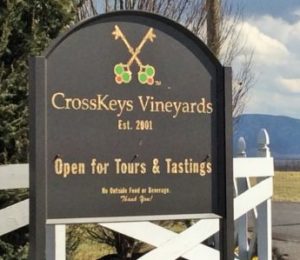
CrossKeys, named for the small rural community of Cross Keys southeast of Harrisonburg, was established in 2001 by Bob and Nikoo Bakhtiar. Bob and Nikoo planted their first vines that very year on land that had been covered in thick cedar forest. Today the 125-acre CrossKeys estate comprises 30 acres of vineyards surrounding a stunning winery and tasting room (pictured right) that includes a bistro as well as a large events room, called the “Key Room,” where they host a variety of special events such as wine dinners and wedding parties.
CrossKeys produces 12 wines, at present, with an average annual production of 7,000 cases — in the 2015 vintage, 90% from estate-grown fruit. With winemakers Stephan Heyns and Steve Monson at the helm in the cellar, the winery has garnered a number of awards over the past several years, including, most recently, a gold medal for their 2015 Cabernet Franc in the 2017 Virginia Governor’s Cup competition.
During a recent visit to CrossKeys, we tasted through the winery’s full portfolio and found them all to be well-crafted and appealing. One thing we immediately noticed — and appreciated — is that Stephan and Steve are careful and calculated in their use of oak in fermenting and aging CrossKeys wines. None of their wines is aged longer than 14 months in oak (most for much less time), and to a significant extent they employ neutral oak barrels to enhance a wine’s texture without imparting taste or masking natural aromas and flavors. Stephan and Steve also are experimenting with Modern Cooperage (pictured above) — a stainless steel barrel with insertable oak staves — which gives them full control over oak exposure throughout the fermentation and aging process.
We recommend that you visit CrossKeys Vineyards and taste their wines, relax in the tasting room or on the patio, stroll around their gorgeous property, and meet the Bakhtiar family. In the mean-time, we share our tasting notes on four of our favorite CrossKeys selections, below.
CrossKeys Vineyards Petit Verdot 2015
Shenandoah Valley
91 Points | “Highly Recommended”
Petit Verdot is a darling variety in Virginia right now. It is hardy, thick-skinned, tannic, and late-ripening, and in Virginia’s warm, humid climate develops full ripeness with good acid retention. The 2015 CrossKeys Petit Verdot is emblematic of the variety’s potential in the state. It is, visually, a thing of beauty, with deeply saturated purple pigmentation and pronounced viscosity. It is just as pleasurable to smell and taste, with aromas of macerated boysenberry, jasmine tea, and iron that lead to flavors of black cherry and cranberry, toasted almond, and juniper berry — all framed by notes of cured tobacco, clove, and muted oak over a tangy finish. It is dry and full-bodied, with chewy tannins and mild acidity. It aged for nine months in 11% new French oak, 7% new American oak, and 82% neutral oak barrels. It is zesty and quite muscular on the palate, and will pair well with robust cheeses, spicy dishes, and smoked meats; indeed, a great barbecue wine.
13% ABV | 450 Cases Produced | $28
Drink Now or Hold
CrossKeys 2015 Petit Verdot is enjoyable now with a half hour’s decant, and should develop nicely through 2022.
CrossKeys Vineyards | Meritage | 2015
Shenandoah Valley
90 Points | “Highly Recommended”
The 2015 CrossKeys Meritage (rhymes with “heritage”) is a blend of three traditional Bordeaux varieties — Petit Verdot (38%), Merlot (37%), and Cabernet Franc (25%) — and is a classy tribute to Old World sensibilities. Aromas suggesting blackberry preserve, violet, and semi-sweet chocolate lead to flavors of macerated dark fruit, bell pepper, and cured tobacco — all layered with notions of grilled herbs, vanilla bean, and leather over a lingering finish. Deep-set impressions of stony minerality are present from beginning to end. The wine is dry, with chewy tannins, mild acidity, andspicy, herbaceous oak. It aged for 14 months in 18% new American oak, 13% new French oak, and 69% neutral oak barrels. The wine is savory and elegant on the palate, and will pair well with robust cheeses, seared filet mignon, grilled vegetables, and other such hearty fare.
13.5% ABV | 350 Cases Produced | $30
Drink Now or Hold
CrossKeys 2015 Meritage is enjoyable now with an hour’s decant, and should develop nicely through 2023.
CrossKeys Vineyards | Merlot | 2015
Shenandoah Valley
90 Points | “Highly Recommended”
This is another CrossKeys red that tips its hat, stylistically, to its vinicultural brethren across the Atlantic (you would be hard-pressed to mistake it for a California Merlot). On the nose are notions of mixed berry compote, damson plum, and toasted nuts; and on the palate, suggestions of blueberry preserve, toffee, and allspice — all interwoven with impressions of graphite, cured tobacco, and subtle, cedar-tinged oak over a savory finish. The wine is dry and full-bodied, with chewy tannins and mild acidity, and offers terrific concentration and balance for this variety in Virginia. It aged for nine months in 30% new French oak and 70% neutral oak barrels. It is food versatile, and will pair well with medium-sharp cheeses, grilled meats, roasted eggplant, braised pork chops, and other such savory fare.
13% ABV | 350 Cases Produced | $22
Drink Now or Hold
CrossKeys 2015 Merlot is enjoyable now with a half hour’s decant, and should develop nicely through 2022.
CrossKeys Vineyards | Chardonnay | 2015
Shenandoah Valley
88 Points | “Recommended”
Virginia Chardonnay tends to be fresh and elegant when not over-oaked, and this is a fitting example. It opens with aromas of baked peach, toasted almond, and coriander; transitions to flavors of ripe apricot, Rainier (yellow) cherry, and white chocolate; and finishes on mellow tones of biscuit, honey, and banana peel. There are impressions of wet stone — perhaps flint — as well, reminiscent of a good Chablis. It is dry and medium-bodied, with moderate acidity and discreetly integrated oak. 40% of the wine was fermented in stainless steel then racked to neutral oak barrels; and 60% was fermented in French oak barrels, 20% new, over nine months. It is lean and silky on the palate, and will pair well with assorted cheeses, creamy pasta dishes, savory poultry dishes, seafood, and other light fare.
12.5% ABV | 500 Cases Produced | $20
Drink or Hold
CrossKeys 2015 Chardonnay is fresh and ready to drink now and will continue to please over the next 3-4 years.
Editor’s note: In addition to the wines above, we recently featured The 2015 CrossKeys Touriga as a “Daily Wine Recommendation” with 87 points | “Recommended.” See our review at this link.
Availability
CrossKeys wines are available directly from the winery, either at the tasting room or online. Visit them virtually at www.crosskeysvineyards.com, e-mail them at info@crosskeysvineyards.com, ring them at 540.234.0505, or visit them personally at their tasting room at 6011 E. Timber Ridge Road, Mt. Crawford, VA 22841.
CrossKeys wines may be found, as well, at select wine retailers and restaurants throughout Virginia. They are available at all Total Wine locations in the state. If you are in Virginia, or nearby, and would like information on availability in your area, contact CrossKeys’ wholesale representative at bubbles@crosskeysvineyards.com.
If you are in, near, or passing through Shenandoah County, All Things Virginia @ The Farmhouse in Woodstock carries a good selection of CrossKeys wines along with assorted other Virginia-made products. For information on their selections, visit them virtually at www.allthingsva.com, e-mail them at vicki@allthingsva.com, ring them at 540.459.9006, or visit them personally at 125 N. Main St., Woodstock, VA 22664. Heritage Mill Wines 1848 in Edinburg, just five miles down historic Route 11 from Woodstock, also carries CrossKeys wines. They are located at 214 S. Main St., Edinburg, VA, and can be reached at 540.984.4077.
For more information or questions about the wines and wineries of the Shenandoah Valley — including a list of Shenandoah Valley wineries — visit the Shenandoah Wine Trail, an association of Shenandoah Valley wineries, at:
www.shenandoahvalleywinetrail.com [...]
Read more...
May 15, 2018Wine ReviewsDry Creek Valley, California
92 Points | “Highly Recommended”
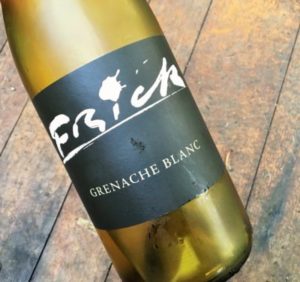
Frick Winery’s Grenache Blanc is, vintage after vintage, a thing of beauty and rarity. There are only four acres of Grenache Blanc, a traditional white Rhone variety, planted in Sonoma County, all-told (as opposed to over 15,000 acres of Chardonnay), and we are fortunate that Bill Frick has some of those vines planted to his rocky, south-facing Owl Hill Vineyard in Dry Creek Valley. Its color is a deeply pigmented golden yellow — stunning in the glass. Aromas are effusive, with suggestions of star fruit, lemon verbena, and macadamia nut; and flavors are sumptuous, with notes of tropical fruit basket, Bananas Foster, and tarragon — all layered with impressions of citrus zest, wet stone, and cardamom over a velvety, viscous finish. The wine is dry, full-bodied, and fleshy on the palate, with quenching acidity. It was fermented and aged in 45% in new oak barrels and 55% stainless steel, sur lie.
This wine is truly a charmer; enjoy it now through 2020 with any variety of lighter, even spicy, fare, including seafood of all types, fresh fruit salad, Thai curries, spring rolls, and grilled fruits and vegetables.
Frick’s 2014 Grenache Blanc is now available, as well, and we look forward to tasting it and sharing our impressions. Our mouths are watering in anticipation.
14.9% ABV | 122 Cases Produced | $26
Availability: www.frickwinery.com [...]
Read more...
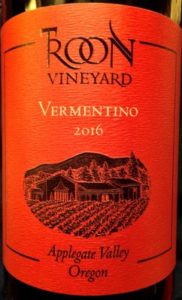
May 15, 2018Wine ReviewsTroon Vineyard in Southern Oregon’s Applegate Valley has been doing some intriguing things with Vermentino over the past several vintages. Their 2014 Blue Label Longue Carabine (NWR 92 Points) featured Vermentino co-fermented with Viognier and blended with a co-ferment of Marsanne and Roussanne; and the 2014 Black Label Vermentino (NWR 90 Points) delivered expressions reminiscent of the renowned white wines of the Vermentino di Gallura DOCG appellation of northeastern Sardinia.
Vermentino is a light-skinned, white grape variety (vitis vinifera) grown throughout Italy (most notably in Sardinia, Tuscany, Liguria, and Umbria) as well as in France (mostly in the Mediterranean south, where it is called “Rolle”), but the variety has only a small, scattered presence in the United States. Vermentino’s aroma and flavor profile bears some resemblance to Sauvignon Blanc, as it can be lean, herbal, and zesty; but it also can be rich, layered, and creamy, not unlike Grenache Blanc, depending, in part, on where it is grown, how it is vinified, and whether it is blended with something else.
For the 2016 vintage, Troon has delivered two distinctively different styles of Vermentino — one inspired by Italian Vermentino, and the other by French Rolle — sourced from separate blocks of their estate vineyards planted on decomposed granite soils. Both are finely crafted, versatile with food, reasonably priced, and pleasurable to drink. Troon has demonstrated, once again and perhaps better than ever, that high-quality Vermentino can be produced beyond Italy and France.
We share our tasting notes, below.
2016 Vermentino
Applegate Valley, Oregon
90 Points | “Highly Recommended”
Troon’s Red Label is made in the Italian style — fresh and crisp, with zesty acidity and a yearning for fresh-caught seafood. It is 100% Vermentino, with delicate aromas of sliced apple, lemon verbena, and green almond that transition to flavors of Anjou pear, green tea, and wet stone — all punctuated by notions of citrus zest and fresh herbs over a mouth-watering finish. It is dry and light in body and texture, with no discernable oak. The fruit picked for this wine was treaded by foot, left on the skins overnight, and pressed the next day. It was fermented in stainless steel with native yeast and aged in neutral French Oak Burgundy barrels for four months before bottling.
12.5% ABV | 380 Cases Produced | $15 | Drink Now
2016 Vermentino Cuvée Rolle
Applegate Valley, Oregon
92 Points | “Highly Recommended”
Troon’s Blue Label is made in the style of French Vermentino, or “Rolle” (hence the name “Cuvée Rolle”), inspired by the Rolle blends of the Languedoc-Roussillon appellation of southern France. The fruit sourced for this wine was allowed to hang and ripen longer than the fruit picked for the Red Label, and it was co-fermented with 10% Marsanne, a white Rhône grape variety known for its peaches-and-honey aromatics and viscous texture. This wine does present an appreciably richer aroma and flavor profile than the Red Label, with impressions of almond biscotti, honeydew melon, and spearmint on the nose; and on the palate, notions of fresh peach, toasted hazelnut, and buttered herbs — all framed by suggestions of honey-roasted cashews over a long, succulent finish. It is dry and full-bodied, with no discernable oak. It was fermented with native yeast in neutral French Oak Burgundy barrels and aged in barrel for four months before bottling.
12.5% ABV | 318 Cases Produced | $20 | Drink Now ~ 2020
Food Pairing
Serve either of these wines with salads, fresh cheeses (e.g., ricotta, goat, mozzarella), baked brie, mixed nuts, seafood (e.g., oysters, calamari, steamed mussels, shrimp, fish tacos), any assortment and preparation of vegetables, fruit tarts, and other light fare.
Troon Vineyard embraces natural, creative, and age-old (though today unconventional) winemaking techniques. Troon employs only native yeasts in ferments; uses no additives — such as acids, sugar, and enzymes — in their wines; and use only mature (neutral) oak barrels for aging (no new oak). Troon allows the soil, vines, and fruit to express themselves in harmony and with authenticity, and it is telling in their wines. For our previous discussions and reviews of Troon Vineyard and its wines, click on this link.
Availability
For more information on the availability of Troon Vineyard’s 2016 Vermentinos or to purchase them, visit Troon Vineyard virtually at www.troonvineyard.com; at the winery, located at 1475 Kubli Road, Grants Pass, Oregon; or at their Carlton, Oregon, tasting room at 250 N. Kutch St.
Future Release: In the spring of 2018, Troon Vineyard will be releasing a third Vermentino in its 2016 vintage lineup — the Black Label, which is being aged for a year in neutral French Oak barrels, on the lees. We look forward to tasting it and sharing our impressions. [...]
Read more...
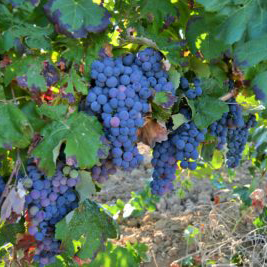
May 14, 2018Dessert Wine / Orange Wine / Red Wine / Rose Wine / Sparkling Wine / Travel & Activities / White Wine / Wine Books / Wine News / Wine ReviewsThe Utiel-Requena D.O. in the Province of Valencia, in eastern Spain, ranks among our top wine discoveries of 2017. Spanish wine, food, wine, and travel expert April Cullom introduced us to the region and its wines at a tasting she organized and hosted in Washington, D.C. — the Utiel-Requena Road Show 2017, which was also held in Boston and Houston. The tasting featured 13 producers from the region, and the star of the show was D.O. Utiel-Requena’s native, “signature,” grape variety — Bobal.
D.O. Utiel-Requena is named for the neighboring municipalities of Utiel and Requena, and winemaking has been central to the history, culture, and traditions of these two towns and surrounding villages and lands for over 2,500 years. The appellation is situated in the interior high plains of Valencia, roughly 45 miles from the coast. The climate is in large part Mediterranean, with some continental characteristics due to its elevation of 2,500 feet above sea level. The area encompasses 86,000 acres of vineyards owned and farmed by some 6,000 families who rely on viticulture for a living; and 100 wineries that produce wine commercially.
Bobal, a vitis vinifera variety, is believed to be indigenous to the region and is the centerpiece of winegrowing in the D.O. Utiel-Requena. The name derives from the Latin bovale, in reference to the shape of a bull’s head. It represents about three quarters of vineyard production in the appellation.
Bobal typically stands on its own as a single varietal wine, but is sometimes blended with other varieties. Other wine grape varieties authorized for cultivation and wine production in D.O. Utiel-Requena include: (red grapes) Tempranillo, Garnacha Tinta, Garnacha Tintorera, Cabernet Sauvignon, Merlot, Syrah, Pinot Noir, Petit Verdot and Cabernet Franc; and (white grapes) Macabeo, Merseguera, Tardana, Chardonnay, Sauvignon Blanc, Parellada, Verdejo and Moscatel de Grano Menudo.
Single-varietal Bobal wines tend to be deeply purple-pigmented (the variety is known to have one of the highest levels of anthocyanin – color saturation – of any red wine grape); and full-bodied and rich in texture, with extracted fruit aroma and flavor characteristics. In our limited exposure to Bobal at the Utiel-Requena Road Show 2017, we found them to be fresh, youthful, and immediately drinkable, as most are aged only briefly in oak; balanced, with approachable tannins and brisk acidity; moderately alcoholic; and inherently food-friendly. They also are very reasonably priced given their consistently high quality and relative to their (potential) market competition. A remarkable number of the wines we tasted are (or would be) less than $20 in the U.S. market.
We thoroughly enjoyed meeting the winemakers and tasting their wines at the Utiel-Requena Road Show 2017. The wines featured below are just a few highlights from the tasting; most are 100% Bobal, some are Bobal-based blends, and a few others consist of different varieties altogether.
We appreciated the wines so much that we believe more should be made available in the U.S. market. At this point in time, D.O. Utiel-Requena wines are not widely imported into, and distributed within, the United States. In fact, some of the wineries represented at the Utiel-Requena Road Show 2017 have no U.S. importer/distributor and were there to build interest and recognition for themselves, the Bobal variety, and the D.O. Utiel-Requena appellation as a whole.
The National Wine Review urges U.S. wine importers and distributors to take the wines of D.O. Utiel-Requena seriously for their character, quality, and value; and to seek opportunities to import and distribute more of these wines in the U.S. wine market for the enjoyment of American wine consumers.
The wineries among those highlighted, below, that do not have importation/distribution in the United States are noted as “Seeking Importer.”
Recommended
VITICULTORES DE SAN JUAN | Bobal de San Juan (Rosé) 2016
Dark pink-pigmented and lively on the nose and palate, with focused notions of rose petal, cinnamon stick, and fresh-picked strawberries. Stainless steel fermented. 100% Bobal. 13% ABV (www.valsangiacomo.es)
DOMINIO DE LA VEGA | Mirame (Rosé) 2016
Vividly aromatic, with notes of melon, fresh-picked raspberry and strawberry, and sea spray. Fresh and mouth-quenching. Fermented in stainless steel and settled on the lees. 50% Bobal; 50% Pinot Noir. 14% ABV (www.dominiodelavega.com)
VITICULTORES DE SAN JUAN | Bobal de San Juan (Red) 2015
Earthy, with aromas of plum preserve, leather, and mulling spices; and flavors of brandied blackberry, toasted almond, and black olive. Layered and complex. Fermented and aged in concrete. 100% Bobal. 13.5% ABV (www.valsangiacomo.es)
PAGO DE THARSYS | Tharsys City Tinto (Red) 2015
Fascinating aromas of buttered plum, eucalyptus, and tobacco lead to deeply layered flavors of cherry preserve, red plum, and herbs. Aged in French and American oak casks for five months. 50% Merlot, 25% Bobal, 25% Tempranillo. 13.5% ABV (www.pagodetharsys.com)
SEBIRÁN | C – Minúscula (Red) 2012
Meaty, with notions of black cherry, dark chocolate, and anise on the nose; and on the palate, impressions of cranberry, orange peel, and sage. A quarter of the wine aged for three months in casks. 100% Bobal. 12.5% ABV (www.sebiran.es) Seeking Importer
Highly Recommended
TORO LOCO | Reserva (Red) 2012
Layered aromas and flavors of ripe plum, black cherry, and vanilla bean. Beautifully balanced, with velvety tannins and appreciable complexity. An oak-aged blend of 50% Tempranillo and 10% each of Garnacha, Cabernet Sauvignon, Merlot, and Syrah. 13.5% ABV (www.toroloco.wine)
BVC Bodegas | El Macho Reserva (Red) 2012
Brawny, with expressions of macerated blackberry, toasted pecan, and leather. An oak-aged blend of 40% Bobal, 30% Tempranillo, 15% Cabernet Sauvignon, 10% Syrah, and 5% Garnacha. 13% ABV (www.bvcbodegas.com)
VITICULTORES DE SAN JUAN | Clos de San Juan (Red) 2013
Vibrant aromas and an elegant palate, with expressions of ripe red fruits, herbs, and toasty oak. Beautifully balanced. Fermented in concrete and aged for 15 months in 500-litre Burgundian oak barrels. 100% Bobal. 13.5% ABV (www.valsangiacomo.es)
VITICULTORES DE SAN JUAN | La Aldea de San Juan (Red) 2013
Spicy, with notes of macerated raspberries and mulberries, baking spices, and toasty oak. Expressive and rich on the palate with fresh acidity over a lingering finish. Complete from beginning to end. Fermented in concrete and aged for 15 months in 500-litre Burgundian oak barrels. 100% Bobal. 13.5% ABV (www.valsangiacomo.es)
COVIÑAS | Adnos (Red) 2012
Rich and robust on the nose and palate, with impressions of black cherry preserve, mineral, mint, and smoked meat — with a terrific uptick of acidity on the finish. Aged for 24 months in oak, deftly integrated. 100% Bobal. 13% ABV (www.covinas.com) Seeking Importer
FINCA SAN BLAS | Bobal 2014
Intensely aromatic, with notions of brandied blackberry, jasmine, cola, and nutmeg over a luscious, mineral-tinged finish. 100% Bobal. 14% ABV (www.fincasanblas.com) Seeking Importer
BODEGAS SIERRA NORTE | Pasion de Bobal Tinto 2014
Earthy, with aromas of baked berries and cocoa butter followed by flavors of brandied dark fruit, dark chocolate, and vanilla. 100% Bobal, aged for six months in oak barrels. 13.5% ABV (www.bodegasierranorte.com)
CHOZAS CARRASCAL | LAS2CES Tinto 2015
Silky smooth, with notions of macerated red berries, buttered nuts, and toast. 100% Bobal, aged for five months in two-three year-old oak barrels. 13.5% ABV (www.chozascarrascal.com) Seeking Importer
BODEGAS HISPANOS+SUIZAS | Bassus Pinot Noir 2014
Deeply aromatic on the nose, with notes of candied black cherry and bay leaf; and deeply extracted on the palate, with notes of macerated boysenberry and redwood over a robust finish. 100% Pinot Noir, aged for 10 months in new French Allier oak barrels and bottled with minimal filtration. 14.5% ABV (www.bodegashispanosuizas.com)
Other producers represented at the D.O. Utiel-Requena Road Show 2017 that are seeking an importer include Ladron de Lunas (www.ladrondelunas.es) and Newcat-Bodegas Vibe (www.bodegasvibe.com).
Inquiries: For more information on the wineries and wines of D.O. Utiel-Requena and their availability in the United States, visit their association virtually at www.utielrequena.org. [...]
Read more...
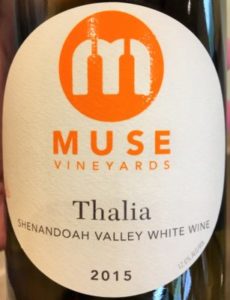
May 4, 2018Wine ReviewsShenandoah Valley, Virginia
90 Points | “Highly Recommended”
A blend of Marsanne (50%), Roussanne (40%), and Viognier (10%), the 2015 Thalia is aromatically complex and fresh on the palate, with velvety viscosity and quenching acidity. Aromas of apricot nectar, roasted hazelnut, and florals transition to flavors of baked pear, brioche, and fresh tarragon — all layered with impressions of orange peel and butterscotch over a honeyed finish. It is dry and medium-bodied with a creamy texture — thanks to full malolactic (secondary) fermentation in new and neutral French oak barrels. It is a Virginia-grown Rhone varietal blend that holds its own against like-priced counterparts from France and California. A refreshing and food-friendly white to drink now and over the next several years.
Recommended Food Pairings: Fresh seafood; roasted poultry; cream-based dishes; Asian cuisine; Indian curries; fall and winter squash dishes; fruit tarts.
12.6% ABV | 222 Cases Produced | $24
To read our original introduction to Muse Vineyards, click on the link: “Raising the Bar for Winemaking in Virginia’s Shenandoah Valley.”
For more information on Muse Vineyards 2015 Thalia and its availability, visit them virtually at www.musevineyards.com. [...]
Read more...
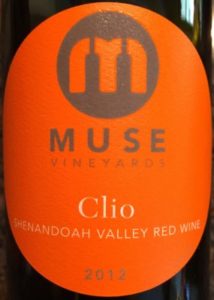
May 4, 2018Wine ReviewsShenandoah Valley, Virginia
92 Points | “Highly Recommended”
2012 is the fourth vintage bottling of Muse Vineyards’ flagship Bordeaux varietal blend, “Clio,” and a composition of equal parts Cabernet Sauvignon, Merlot, Cabernet Franc, Petit Verdot, and Malbec — all estate grown. It presents an appealing balance of fruit and earth, with aromas of macerated blackberry, grilled tomato, and violet that segue into flavors of fresh-picked black cherry, fig, and poblano pepper — all layered with impressions of bay leaf, cocoa bean, and iron over a lingering, savory finish. The wine is dry, full-bodied, and velvety on the palate, with mild acidity and approachable tannins. Oak is spicy and herbaceous, but well integrated; the wine aged for 24 months in French oak barrels, 40% new and the remainder neutral, and was not fined or filtered. Unlike some other higher-end Virginia wines, Muse does not hide behind new oak; in Muse wines, oak is an accent — a discreet frame around the art — not the dominant trait.
The 2012 Clio is a sophisticated and eminently eMuse Corknjoyable expression of traditional red Bordeaux varieties as grown in Virginia’s Shenandoah Valley and assembled with meticulous attention to detail by Muse Winemaker Tim Rausse. It will serve as a versatile food wine; drink it now and over the next several years.
Recommended Food Pairings: Medium-to-sharp cheeses; cured, roasted, and smoked meats; seared filet mignon; cassoulet; venison; and other such hearty fare.
13% ABV | 222 Cases Produced | $35
To read our original introduction to Muse Vineyards, click on the link: “Raising the Bar for Winemaking in Virginia’s Shenandoah Valley.”
For more information on Muse Vineyards 2012 Clio and its availability, visit them virtually at www.musevineyards.com. [...]
Read more...
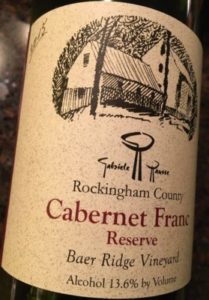
May 4, 2018Wine ReviewsRockingham County, Virginia
90 Points | “Highly Recommended”
Veteran Virginia Vintner Gabriele Rausse’s winery is located in the heart of the Monticello American Viticultural Area, just south of Charlottesville, but he sourced his 2015 Cabernet Franc from across the Blue Ridge in the Shenandoah Valley. The 20 year-old Baer Ridge Vineyard, in Timberville, Rockingham County, is planted on a south-facing slope at an elevation of 1,300 feet, over well-drained soils steeped in limestone deposits. This is among the driest growing areas of Virginia in terms of annual rainfall, benefitting from a rain shadow cast by Appalachian Mountain ridges on both sides of the Valley, east and west. This is apple country in Virginia, and the vineyard is surrounded by commercial apple orchards.
Cabernet Franc is a popular and widely grown vitis vinifera variety in Virginia, and as crafted by Winemaker Tim Rausse, Gabriele’s son, this wine is how Virginia Cabernet Franc should be. It is subtly aromatic, with suggestions of mixed berry pie, toasted walnut, and lavender on the nose; and on the palate, flavors of dried cherry, tomato preserve, and roasted red bell pepper — all interwoven with notions of rhubarb, cinnamon, and dried herbs over a savory finish. The wine avoids the searing “green” herbaceousness that plagues many Virginia Cab Francs. It is dry, full-bodied, and rather meaty on the palate, with moderate acidity and approachable tannins. Oak adds a little spice to the wine; it aged for 12 months French oak barrels, 25% new. Drink now and over the next several years.
Recommended Food Pairings: This Cabernet Franc will serve as a versatile food wine. Serve it with medium-to-sharp cheeses; cured, roasted, and smoked meats; seared filet mignon; cassoulet; venison; and other such hearty fare.
13.6% ABV | $28 | 120 Cases Produced
Availability: Gabriele Rausse wines are produced in very limited quantities, but may be found in select locations throughout Virginia and in Washington, D.C. For more information on availability, visit them virtually at gabrieleraussewinery.com. [...]
Read more...
Would you like to see more reviews?
An extended library of wine reviews is available in our archives. Click here to discover more wines from around the world.